

Seawalls & Shoreline Stabilization
A seawall is a retaining structure
A seawall is not a landscaping feature. It is a retaining structure holding back soil that wants to move, and the water in front of it is only half the reason it is there. The other half is what is behind it, because most seawall failures are caused by water on the land side rather than waves on the lake side.
That is the single most useful thing to understand before commissioning one, and it is why drainage details matter more than the visible face of the wall.
Holding soil, with water in front of it rather than against it.
Hydrostatic pressure from the land side, not wave action.
Weep holes and backfill are what keep pressure off the wall.
Managed lakes require approval before work begins.
Seawalls fail from behind
The intuitive picture is waves pounding a wall until it gives way. The common reality is quieter. Rain saturates the soil behind the wall, that water has nowhere to go, and the resulting hydrostatic pressure pushes outward on a structure that was designed to hold soil, not to hold water.
The symptoms are recognizable: a wall leaning outward at the top, vertical cracking, sections displaced relative to their neighbors, and soil settling or sinkholes appearing in the yard behind. That last one usually means soil is escaping through the wall rather than the wall moving, which is a different failure with the same cause.
The countermeasure is drainage. Weep holes through the wall, a free-draining backfill behind it, and filter fabric so the fines cannot wash out through the drainage path. Those three details are unglamorous, invisible once complete, and the difference between a wall that stands for decades and one that leans in a few years.
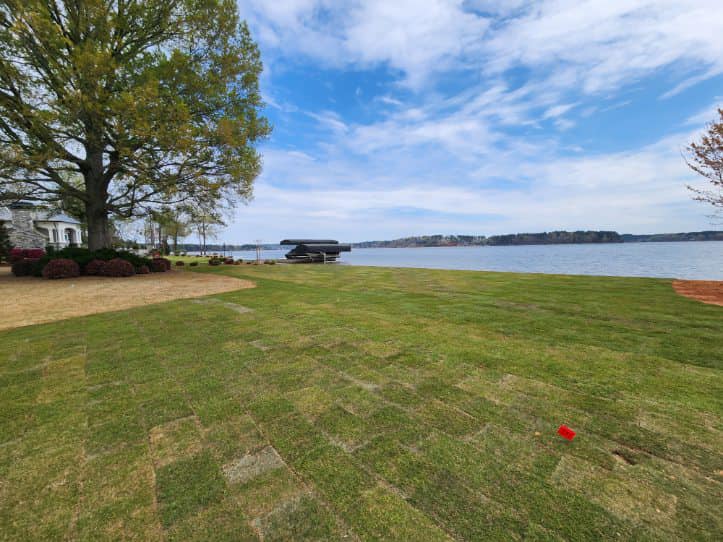
Repair, or replace
A wall with localized damage on an otherwise sound structure is a repair. Sections can be re-anchored, cracks addressed, and drainage retrofitted, and a tieback system can often bring a leaning wall back into service without full replacement.
What argues for replacement is systemic movement: the whole wall leaning, the cap separating along its length, or the soil behind showing widespread settlement. At that point the structure has already failed and the repairs are cosmetic.
The variable that decides which is which is what is behind the wall rather than what is visible on the face, so the assessment involves the yard, not just the shoreline. A wall that looks poor but sits on stable, drained ground is often more salvageable than one that looks acceptable with voids behind it.
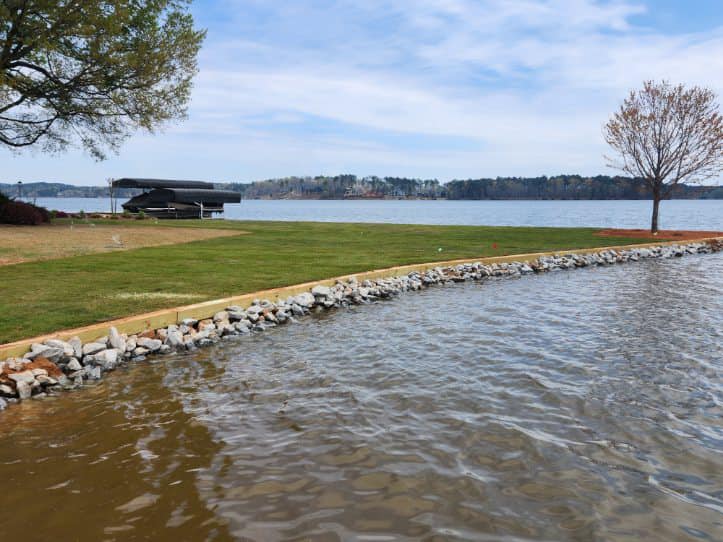
Erosion is the thing you are actually solving
Shoreline erosion on a lake comes from wake and wave action, from the water level moving up and down against the bank, and from surface runoff cutting down the slope from the land side. A seawall addresses the first two directly and does nothing about the third.
That is worth naming, because a wall installed against a runoff problem will be undermined from behind by the water it was never designed to intercept. Where runoff is a contributor, dealing with the drainage on the property is part of the same project rather than a separate one.
It is also why a seawall is not always the right answer. On some shorelines, riprap or a vegetated stabilisation approach handles the erosion with less structure and fewer permitting constraints, and it is a fairer conversation to have before a wall is specified.
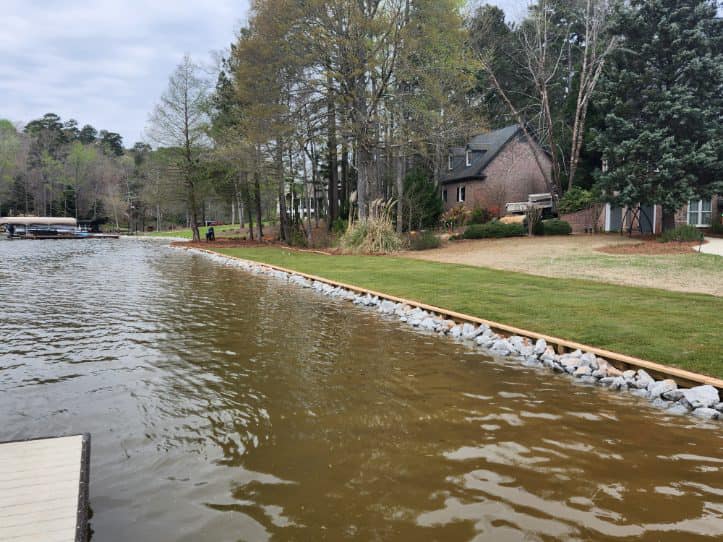
How the work happens
5 stagesThe work itself
JKey job photography

Frequently Asked Questions
Why is my seawall leaning?
Water pressure from behind, almost never force from the lake. Rain saturates the soil on the land side. The water cannot escape, so the pressure pushes the wall outward. Blocked or absent weep holes are usually why it has nowhere to go. A wall leaning at the top with cracking below is the classic presentation.
Can a leaning seawall be repaired?
Often. It depends on how far it has moved, and on the soil behind it. Tieback anchors can pull a wall back and hold it there. Retrofit drainage removes the pressure that moved it. Systemic failure along the whole wall argues against repair. So does widespread settlement behind it.
What causes sinkholes in the yard behind a seawall?
Soil escaping through the wall. Where fines wash out through joints, cracks or weep holes without a filter behind them, the ground behind loses volume and settles, and the depressions appear at the surface. It is a warning that the drainage detail behind the wall is not doing its job, and it usually precedes movement in the wall itself.
Do I need a permit for a seawall?
On a managed shoreline, yes. Georgia Power administers the Lake Oconee and Lake Sinclair shorelines. Shoreline work needs approval before it begins, and that approval governs placement and extent. Permitting comes before design for that reason.
Is a seawall always the right answer for erosion?
Not always. It depends what is causing the erosion. Wake and water level cycling, a wall addresses directly. Surface runoff off the property is different: a wall alone gets undermined from behind. On some shorelines riprap or a vegetated approach handles the problem with less structure and fewer permitting constraints, and that is worth discussing before a wall is specified.
Let’s Build Something Strong Together
Ready for reliable restoration, roofing, construction, or marine services? Contact us today for expert solutions built to last!