
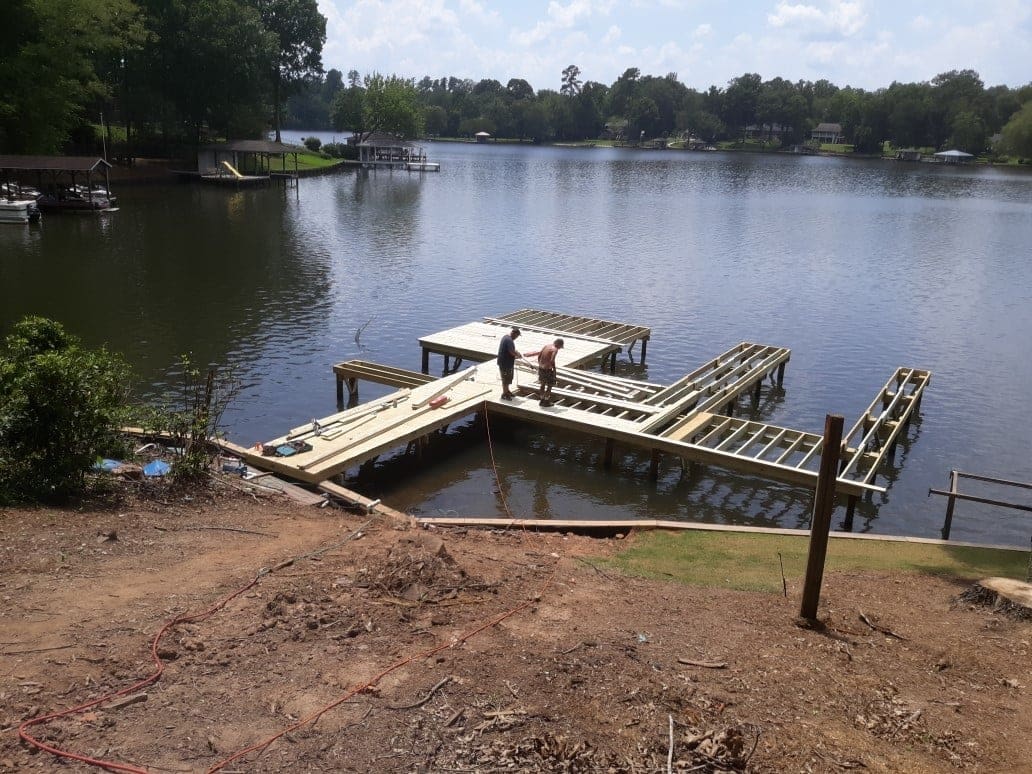
The Importance of Professional Boat Docks by JKey Marine
What makes a dock last
A dock is a structure built in the worst possible conditions for a structure. Permanently wet at the waterline. Permanently dry above it. And cycling between the two in the zone that matters most. What separates a dock that lasts decades from one that needs work in five years happens below the deck boards. Where nobody looks.
JKey Marine builds on Lake Oconee, Lake Sinclair and the surrounding north Georgia lakes, out of a business that has worked in the construction industry for over 20 years. What follows is how docks are actually built, what permitting involves on a managed lake, and what drives the cost.
Lake Oconee, Lake Sinclair and the surrounding water.
Wet and dry cycling is what ages a dock, not submersion.
Managed lakes require approval before construction begins.
Across all four divisions of the business.
Fixed, floating, or a bit of both
The first decision is how the dock relates to the water level, and on a managed lake that is a real question because the level moves. A fixed dock is built on pilings driven into the lake bed. It is rigid, it carries load well, it takes a boat lift without complication, and it is the right answer where the bottom is firm and the water level is reasonably stable.
A floating dock rides the surface, so the step down to a boat is the same regardless of level. That is a genuine advantage on water that fluctuates and for anyone who wants an easy transfer, and it is often the only workable option where the bottom is soft or the depth makes piling work impractical.
Many lots end up with a combination: a fixed walkway from the shoreline out to a floating platform. That gives a stable approach over the shallow, variable near-shore section and a level boarding surface where the boat actually sits.

The permit comes before the design is final
Shoreline construction on a managed lake is not something you build first and register later. Georgia Power manages the Lake Oconee and Lake Sinclair shorelines, and building there needs a shoreline permit. Lake Lanier is different again. The US Army Corps of Engineers administers it under its own program.
What that means practically is that size, footprint, setbacks from property lines and how far a structure may extend from shore are decided by the lake authority rather than by the owner or the builder. A design drawn without reference to those limits is a design that will be redrawn.
It also means the sequence matters. Establishing what is permissible for a particular lot, then designing inside that envelope, is faster than designing what you want and finding out afterwards. Anyone proposing to start construction before that approval exists is proposing a problem.

What drives the cost of a dock
The deck is the cheap part. Cost is driven by what is underneath and what it took to get there: the number of pilings, how deep they had to go, what the lake bed is made of, and how far from shore the structure extends.
Access is the variable people forget. A lot with a gentle grade and a place to stage material is a very different job from a steep lot with no equipment access, where everything arrives by water. That difference can exceed the cost of the materials.
Then there is what the dock is asked to do. A simple platform, a covered slip, a boat lift, a second story, electrical service, water and lighting are all separate decisions with separate structural implications. A lift in particular has to be planned into the framing rather than added to it later.

How the work happens
5 stagesThe work itself
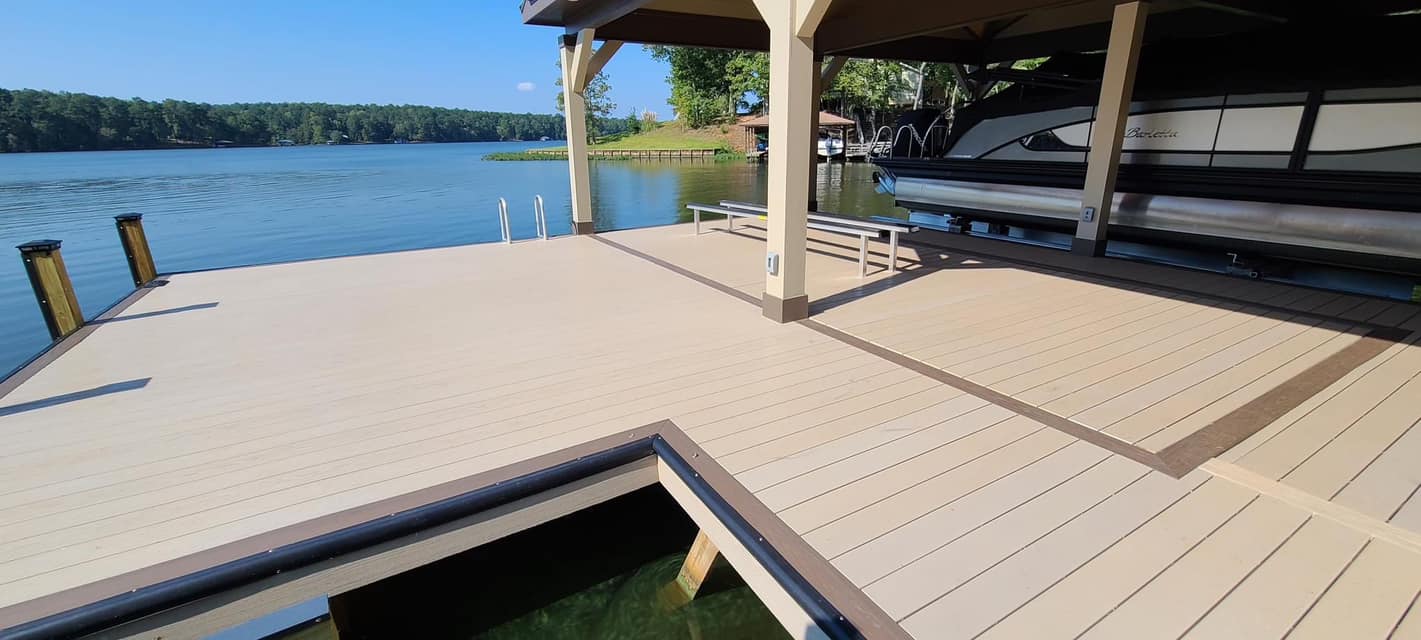
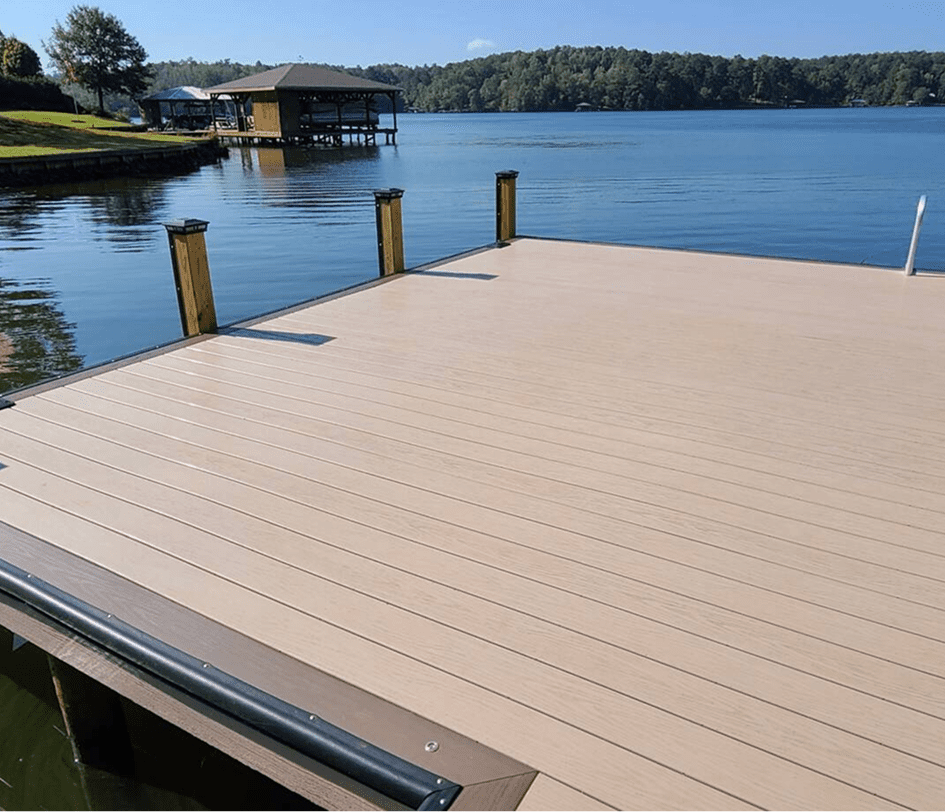
JKey job photography



Frequently Asked Questions
Do I need a permit to build a dock on Lake Oconee or Lake Sinclair?
Yes. Both lakes have managed shorelines, administered by Georgia Power, and dock construction requires a shoreline permit before work begins. The permit governs size, placement, setbacks from property lines and how far a structure may extend from shore, which is why it is settled before the design is finalized rather than after.
How much does a dock cost?
It varies enough that any single figure would be misleading, because the drivers are site specific: the number and depth of pilings, the lake bed, how far the structure extends, and how difficult the lot is to reach with equipment. A covered slip with a lift and utilities is a different order of project from an open platform. Our blog post on what goes into dock cost walks through each of those inputs.
Fixed dock or floating dock?
Fixed docks sit on pilings, are rigid, carry load well and accommodate a lift without complication, which suits firm bottoms and reasonably stable water. Floating docks ride the surface, so boarding height stays constant as the level changes, and they work where the bottom is soft or the depth makes piling impractical. A fixed walkway out to a floating platform is a common and sensible compromise.
How long does a dock last?
It depends almost entirely on the substructure and the hardware rather than the decking. Pilings and framing in the wet and dry cycling zone at the waterline are what age first, and fasteners not specified for continuous water exposure will fail long before the timber does. A dock built well below the deck can be resurfaced repeatedly; one built poorly cannot be rescued by new boards.
Can a boat lift be added to an existing dock?
Sometimes, and it depends on how the dock was framed. Lifts impose concentrated loads that a structure has to be designed to carry, so the honest answer requires looking at the existing substructure rather than the deck surface. Where the framing will not take it, the alternative is usually a freestanding lift on its own pilings alongside.
Let’s Build Something Strong Together
Ready for reliable restoration, roofing, construction, or marine services? Contact us today for expert solutions built to last!